Should You Repair or Replace Your Roof? Here’s How to Tell
Can a Roof Be Repaired?
If your roof is leaking, showing its age or starting to need regular maintenance, you may eventually face one of the biggest questions a homeowner can ask:
Should I repair my roof, or is it time to replace it?
The answer isn’t always as simple as looking at the age of the roof.

We’ve inspected roofs where homeowners were convinced they needed a complete replacement, only to find that targeted roof repairs could give the roof many more years of useful life.
We’ve also seen the opposite: roofs that have been repeatedly patched when the overall condition had deteriorated to the point where replacement would have been the better long-term investment.
For homeowners looking at roof repairs in Brisbane, the key is understanding the condition of the entire roofing system rather than simply fixing the most obvious problem.
Here’s what we look at when helping homeowners decide whether to repair or replace their roof.
When Can a Roof Be Repaired?
Not every leaking or damaged roof needs replacing.
If the majority of your roof is still in good condition and the problem is isolated to a particular area, a professional roof repair can often be the most economical solution.
A roof may be a good candidate for repair when:
The roof is still relatively young
Damage is limited to one or two areas
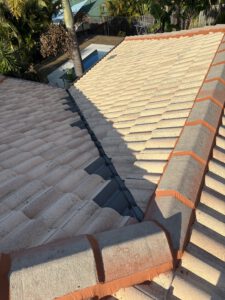
Most roof tiles are still structurally sound
Metal roofing sheets are not badly rusted or corroded
Ridge capping is still in reasonable condition
Only sections of pointing or bedding have deteriorated
A small number of tiles are cracked or broken
Flashing around penetrations needs repairing or replacing
Roof screws or fixings have begun deteriorating
The underlying roof structure is still sound
For example, if a storm damages several tiles but the remainder of the roof is healthy, replacing the entire roof would usually be unnecessary.
The better option may simply be to replace the damaged tiles, inspect the surrounding area, and make sure there aren’t any additional problems allowing water into the home.
The important thing is determining whether you’re dealing with an isolated roof problem or a symptom of widespread deterioration.
Signs Your Roof May Need Replacing
There comes a point where continuing to repair a deteriorating roof becomes false economy.
You might spend money repairing one section only to have another problem appear several months later.
Some of the warning signs we look for include:
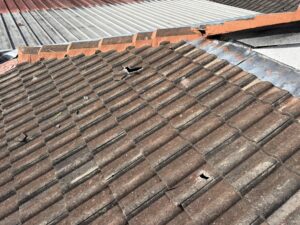
Widespread tile deterioration
Roof tiles can deteriorate over time.
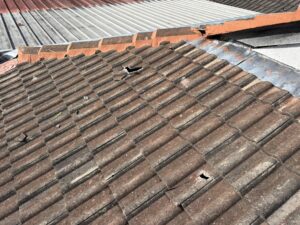
Heavy pitting, cracking and general deterioration across large sections of a tiled roof can indicate that repairing individual tiles isn’t going to solve the underlying problem.
If dozens or hundreds of tiles are reaching the end of their serviceable life, continuously replacing individual tiles may not make financial sense.
Holes or severe corrosion in metal roofing
A small problem with a metal roof may sometimes be repaired.
However, extensive rust, corrosion or holes appearing throughout the roofing sheets can indicate that the metal itself has deteriorated significantly.
At this point, patching individual areas may only delay the inevitable.
Repeated roof leaks
One roof leak doesn’t necessarily mean you need a new roof.
But if you’ve had multiple roof leak repairs and new leaks continue appearing in different areas, it’s worth investigating the condition of the entire roof.
The leak you can see inside your home isn’t always directly underneath the point where water is entering.
Water can travel along battens, rafters and other roof components before appearing inside the ceiling.
That’s why finding the actual source of a roof leak is such an important part of professional roof repairs on Brisbane houses.
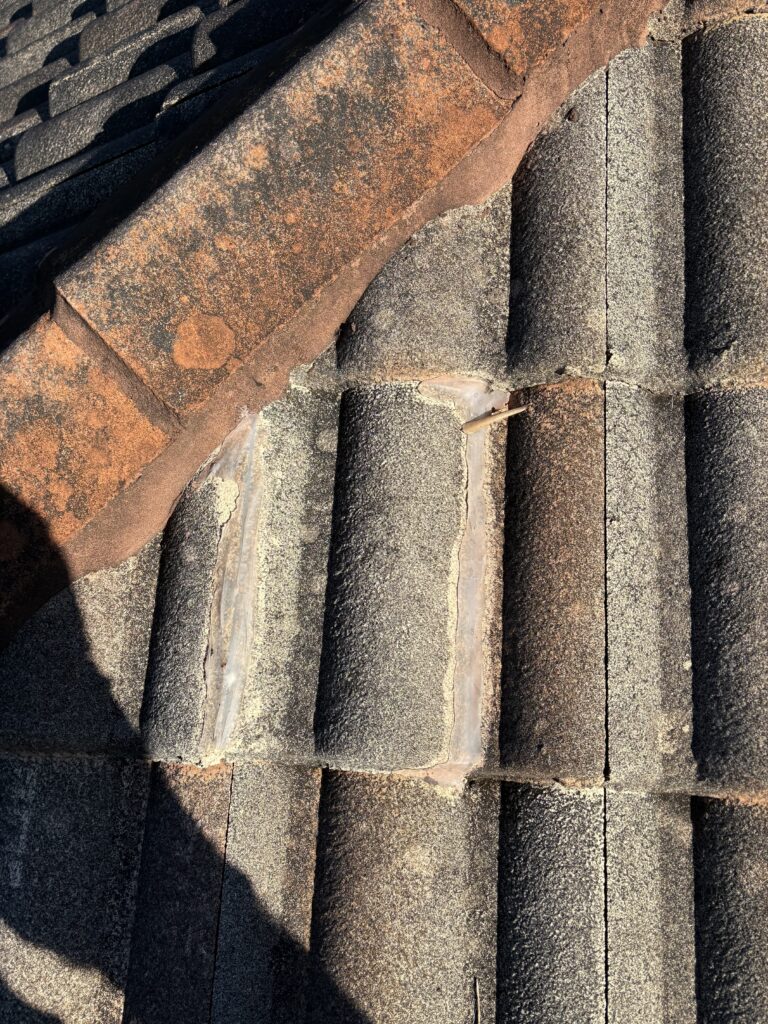
Widespread ridge capping deterioration
The ridge capping protects some of the most vulnerable sections of a tiled roof.
Over time, the bedding and pointing underneath and around ridge caps can deteriorate, crack or separate.
In some cases, repointing or rebedding the ridge caps may be enough.
If the deterioration is widespread and accompanied by ageing tiles and other roofing problems, however, it may be worth considering whether investing heavily in restoration work is worthwhile.

How Much Does the Age of Your Roof Matter?
Age is important, but age alone doesn’t determine whether a roof needs replacing.
Two roofs installed at the same time can be in very different condition depending on:
- Previous maintenance
- Quality of the original installation
- Roofing materials
- Exposure to weather
- Surrounding trees and vegetation
- Storm damage
- Previous repairs
- Roof pitch and drainage
- Ventilation
- Coastal or environmental exposure
That’s why we prefer to assess the actual condition of the roof rather than automatically recommending replacement based on its age.
Tiled roofs
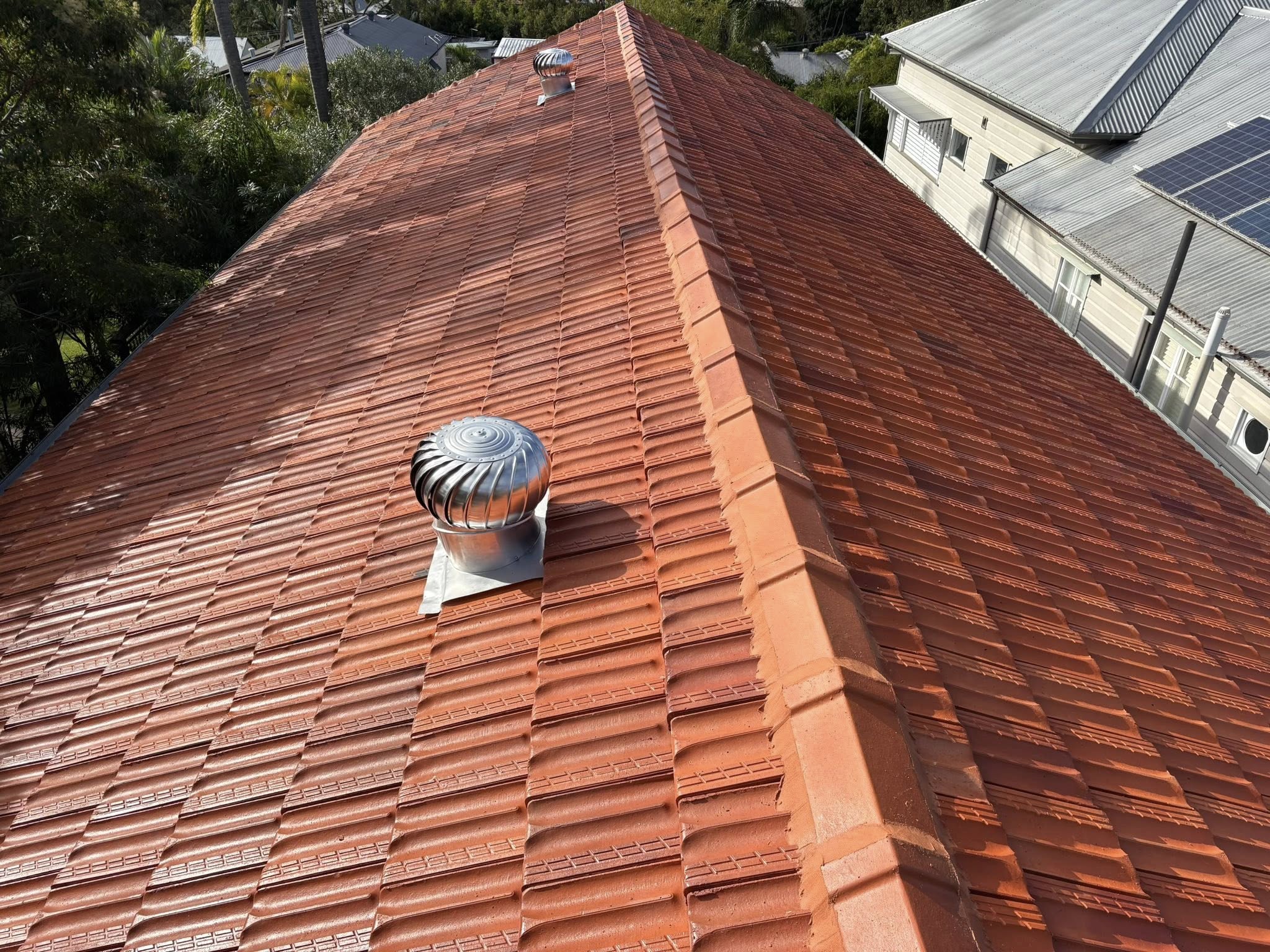
A tiled roof can last for decades when properly installed and maintained.
However, that doesn’t mean it should be ignored for decades.
Having the roof professionally inspected periodically, particularly once it begins getting older, can identify cracked tiles, deteriorating pointing and other problems before they cause water damage inside the home.
As a general rule, having a tiled roof thoroughly inspected around every 10 years is a sensible preventative maintenance strategy, with additional inspections after significant storms or when signs of a problem appear.
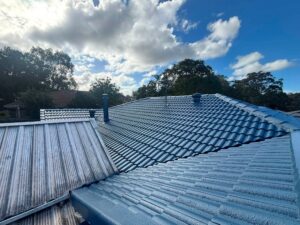
Metal or tin roofs
Metal roofing also has a long potential lifespan, but it isn’t maintenance-free.
Protective coatings can deteriorate, screws and fixings can fail, and corrosion can develop around penetrations, joins and damaged areas.
Older metal roofs may require recoating or other maintenance to protect the underlying material and extend the roof’s serviceable life.
Some Roof Repairs Are Cheap — Others Aren’t
The cost of a roof repair in Brisbane can vary enormously depending on what has actually gone wrong.
Replacing a couple of accessible broken tiles is very different from repairing structural damage or dealing with widespread deterioration.
Relatively straightforward repairs can include:
Replacing broken or cracked tiles
Replacing damaged roof screws
Repairing small sections of flashing
Repointing isolated areas
Repairing minor leaks
More significant work may involve:
Extensive repointing or rebedding
Large sections of damaged roofing
Water-damaged timber
Structural repairs
Major flashing problems
Extensive corrosion
Repeated leaks across multiple sections of the roof
This is why giving an accurate roof repair price without inspecting the roof can be difficult.
The visible problem may only be part of what’s happening.

Repairing vs Replacing: What Costs More?
A complete roof replacement will obviously cost significantly more upfront than repairing an isolated problem.
Depending on the size, materials, accessibility and condition of the property, a roof replacement can easily cost $20,000 or more.
Roof repairs can be considerably cheaper, particularly when the problem is identified early.
However, price shouldn’t be the only consideration.
Imagine spending several thousand dollars repairing an ageing roof and then discovering 12 months later that another major section needs work.
You could eventually spend a significant amount repairing a roof that still needs replacing.
On the other hand, replacing an otherwise healthy roof because of one repairable problem could mean spending tens of thousands of dollars unnecessarily.
The better question isn’t simply:
“Which option is cheaper today?”
It’s:
“Which option gives me the best value over the next 5, 10 or 20 years?”

We’ve Seen Homeowners Make Both Mistakes
After inspecting and carrying out roof repairs around Brisbane, we’ve seen both sides of this decision.
We’ve seen homeowners believe they need an entirely new roof when the actual problem could be repaired.
We’ve also seen homeowners continue putting money into an old, deteriorating roof because each individual repair seemed cheaper than replacement.
Both situations can become expensive.
Replacing a roof prematurely means spending money you didn’t necessarily need to spend.
Repeatedly repairing a roof that has reached the end of its serviceable life means continually investing money into something that will eventually need replacing anyway.
A proper roof inspection helps you avoid both situations.
What Do We Look at During a Roof Inspection?
When assessing whether a roof should be repaired or replaced, we don’t just look at the obvious damaged area.
We assess the overall condition of the roofing system.
Depending on the type of roof, we’ll look at areas such as:
Roof tiles
We check for cracked, broken, displaced and heavily deteriorated tiles.
A handful of damaged tiles can usually be dealt with very differently from widespread tile deterioration.
Metal roofing sheets
On metal roofs, we’ll look for rust, corrosion, damaged coatings, holes and other signs that the roofing material is deteriorating.
Roof screws and fixings
Roof screws don’t last forever.
Loose, deteriorated or incorrectly installed fixings can allow water to enter and may indicate that maintenance is required.
Ridge capping and pointing
Cracked or deteriorating pointing can allow ridge caps to move and water to penetrate vulnerable areas of the roof.
We’ll assess whether sections can simply be repointed or whether more substantial work is required.
Flashing and roof penetrations
Areas around chimneys, skylights, vents, valleys and other roof penetrations are common places for leaks to develop.
Sometimes what appears to be a major roofing problem is actually an isolated flashing issue.
Signs of underlying damage
Most importantly, we look beyond the surface.
Water that has been entering a roof for a long time can potentially affect battens, timber and other components underneath the roofing material.
Identifying those problems early can prevent a relatively manageable roof repair from becoming a much larger job.
So, Should You Repair or Replace Your Roof?
There isn’t one answer that applies to every home.
Generally, roof repair makes sense when the damage is isolated and the majority of the roof remains in good condition.
Roof replacement becomes more attractive when deterioration is widespread, repairs are becoming frequent or the cost of restoring the existing roof is becoming significant compared with replacing it.
The goal shouldn’t be to sell you the biggest job possible.
It should be to determine what your roof actually needs.

Need Roof Repairs in Brisbane?
If you’re unsure whether your roof needs repairing, restoring or replacing, the best place to start is with a professional inspection.
At All Weather Roofing Solutions, we’ll inspect the condition of your roof, identify the problems and explain your options.
If the roof can be repaired, we’ll tell you.
If continuing to repair it is likely to cost you more money in the long run, we’ll explain why replacement may be the better option.
No unnecessary work. No replacing a roof that can reasonably be repaired. Just practical advice based on what we find.
Get in touch with All Weather Roofing Solutions to arrange an inspection and find out what your roof actually needs.